Imagine spawning into a world of endless golden sand under a blazing sun. No trees punch for wood, no cows or pigs for quick food, just cacti and the occasional rabbit hopping away. Survival seems possible until nightfall, when husks shamble out. But now, with the Mounts of Mayhem update released in December 2025, deserts have become a non-stop kill zone.
This biome combines resource starvation, relentless undead mobs active day and night, deadly traps, and new mounted horrors that turn exploration into a frantic fight for life.
1. A Barren Hellscape: Resources That Kill You Slowly
Deserts offer almost nothing for new players. The surface is pure sand with no trees, meaning no wood for tools, torches, or shelter on day one. Dead bushes yield sticks at best, but building a crafting table requires punching them bare-handed.
Food is scarce: Rabbits spawn but flee fast and drop minimal meat. Villages or rare desert wells provide water and loot, but finding them in vast dunes is a gamble. Rotten flesh from husks is your main "food," yet it risks poisoning and hunger saturation drain. Starvation claims more lives here than mob attacks in early game, especially if you spawn far from structures.
2. Husks: The Sun-Proof Stalkers
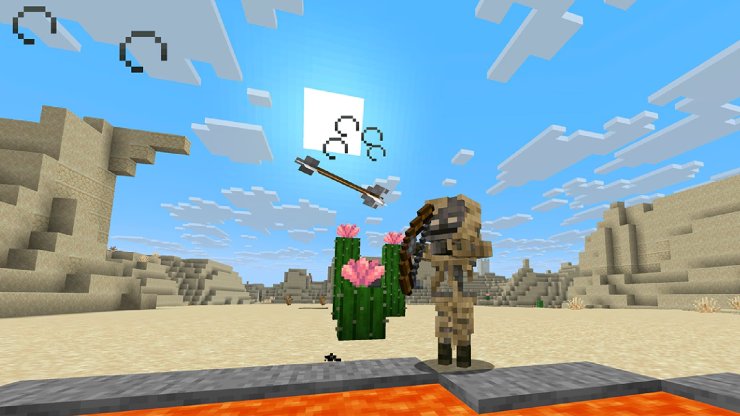
Unlike standard zombies, husks dominate deserts (80% zombie replacement rate). They ignore sunlight, swarming during the day when you'd expect safety. Their attacks inflict the Hunger effect, slashing your food bar's efficiency and hastening starvation.
High spawn weights (80⁄515 in normal deserts) mean packs of 2-4 husks patrol constantly. No forest cover means zero hiding spots, turning open sands into a gauntlet.
3. Mounts of Mayhem: Camel Husk Jockeys and Parched Riders
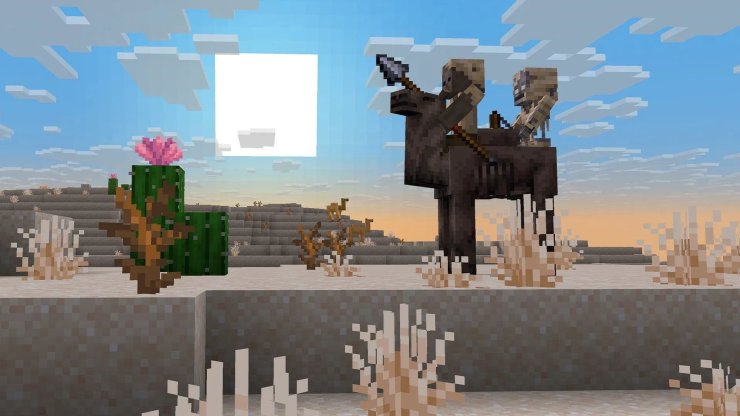
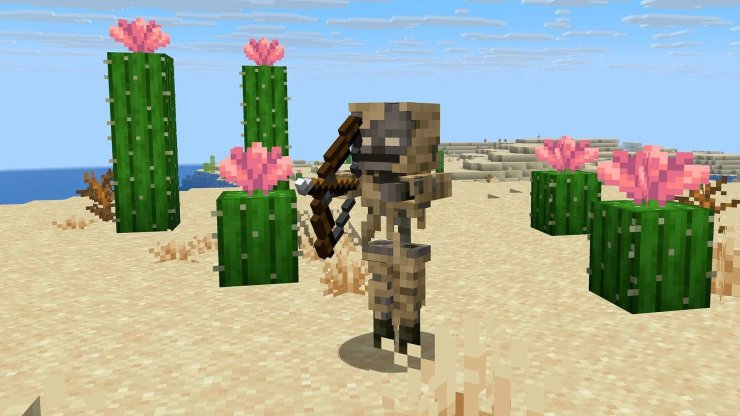
The 1.21.11 update (Java) and 1.21.130 (Bedrock) introduced game-changers. Camel husks, undead camel variants, spawn at night or in thunderstorms. Alone, they're passive, but 10% spawn as deadly jockeys: A front husk wields an enchanted iron spear for melee lunges, while a rear parched (desert skeleton) fires arrows of Weakness from afar.
Camel husks dash 12 blocks forward, resist falls, and never burn in sun. Parched skeletons replace some regulars, shooting slower but debilitating Weakness arrows (30 seconds) without burning either. These trios close gaps fast in flat terrain, overwhelming solo players. One source calls them "mini-bosses."
4. Structures That Lure and Destroy
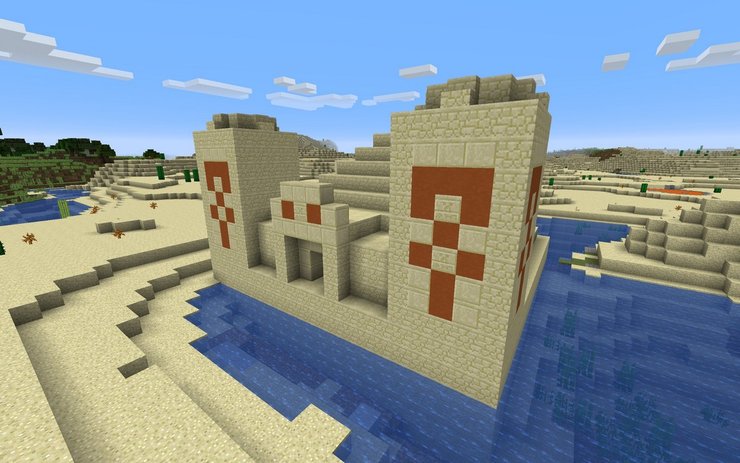
Desert pyramids promise loot but hide a four-chest room with a central stone pressure plate triggering nine TNT blocks. One wrong step vaporizes everything. Mobs spawn in the dark interior, often triggering it first.
Pillager outposts offer wood but spawn raids, and villages attract illager attacks with Bad Omen.
5. Subtle Killers: Environment and Exposure
Cacti deal contact damage everywhere. No rain means no natural water refill. Endless flats expose you to ranged parched shots, and sandstorms (visual clutter) hide ambushes. Getting lost dooms you to dehydration-like starvation.
Deadlier Than the Rest?
| Biome | Main Threats | Resource Access | Daytime Safety |
|---|---|---|---|
| Desert | Husks, camel jockeys, starvation, traps | Poor (no wood/food) | None |
| Ocean | Drowning, guardians | Decent (fish) | High |
| Mushroom | No mobs, but no wood | Poor | Total |
| Snowy Peaks | Falls, blazes | Fair | Medium |
Deserts uniquely stack 24/7 mobs, zero starter resources, and traps. Oceans let you fish; mushrooms block spawns. Post-update, deserts demand combat prowess from minute one.
Next time you crave challenge, punch a new world in creative, fly to a desert, and delete inventory. You'll respawn begging for plains. The desert isn't just dangerous; it's Minecraft's perfect storm of doom.










Comments