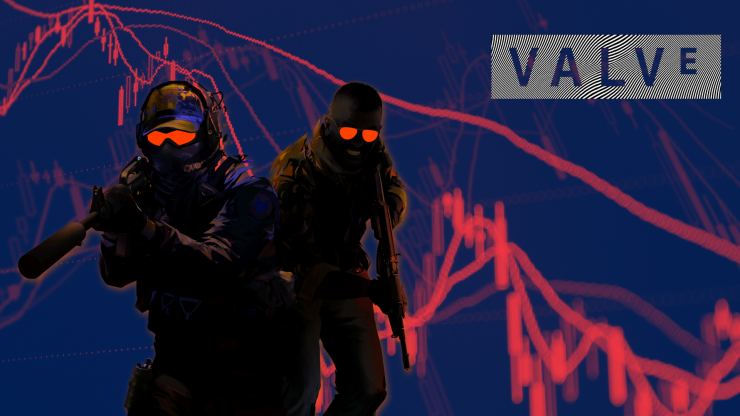
In a single night in October 2025, the Counter-Strike 2 skin economy lost nearly half its value. What was once a $6 billion virtual marketplace evaporated into thin air, leaving traders, pros, and casual collectors staring at red numbers on their Steam inventories. Panic selling swept through the community like a Dust II smoke grenade. Valve's quiet update had just rewritten the rules of rarity, and the fallout was immediate, brutal, and unforgettable.
What Caused the Collapse?
The trigger was simple but explosive. On October 23, 2025, Valve quietly expanded the Trade Up Contract system. Players could now combine five Covert-quality (red-tier) weapon skins to craft a knife or a pair of gloves from the same collection. StatTrak versions followed the same rule. For years, these gold-tier items had been lottery-ticket rare. Their scarcity drove prices into the thousands, sometimes tens of thousands of dollars. Suddenly, anyone with enough red skins could manufacture them on demand.
The Massive Market Crash
The market reacted like a house of cards in a hurricane. Knife and glove prices plummeted as new supply flooded in. Red skins themselves briefly skyrocketed because everyone needed them as crafting fuel. Pricempire data showed the total CS2 skin market cap crashing from over $6 billion to roughly $4 billion within hours, with some trackers reporting a low of $3 billion. That is roughly $2 to $3 billion in player-owned value wiped out overnight.
High-profile names felt the pain. Streamers and investors watched six-figure collections shrink. Reports surfaced of pro players and celebrities losing tens or even hundreds of thousands. Memes flooded Reddit and X: jokes about Gabe Newell finally making knives affordable, mixed with genuine despair from people who had treated the skin market like a second stock portfolio.
Community Reaction and Aftermath
Not everyone was upset. For new and budget-conscious players, the crash opened doors. A once-unreachable Flip Knife or Sport Gloves set became realistic. Community forums split sharply. Some called it a necessary correction to years of speculative hoarding and artificial scarcity. Others accused Valve of destroying trust in the entire ecosystem without warning.
The chaos did not stop at knives. Souvenirs, cases, and even some mid-tier playskins felt the ripple effects. Panic listings flooded the Steam Market. Buy orders dried up. For a few frantic days, the entire economy looked ready to implode.
Yet the market did not die. Within days, prices stabilized somewhat. By late October 2025, the cap had clawed back toward $4.7 billion. Still, the damage was done. Confidence took a hit. Many longtime investors liquidated everything and walked away.
Eight months later, in mid-2026, the memory lingers. The October collapse is now shorthand for how quickly Valve can reshape an economy it controls entirely. The CS2 skin market taught a harsh truth about digital assets: they only hold value as long as the developer says they do.








Comments