The internet was built on anonymity, pseudonymity, and the free flow of information. That foundation is under systematic attack. Around the world, governments are rushing through laws framed as essential "child safety" measures. These require platforms to verify users' ages - often through government-issued IDs, facial biometrics, or other invasive methods. Big Tech companies are complying, developing the tools, and in some cases lobbying for the very frameworks that expand their data collection and control.
The endgame? An internet where every user must prove their real-world identity to participate fully. No more anonymous browsing, whistleblowing, research on sensitive topics, or casual exploration. Just a logged, trackable, surveilled digital panopticon sold as "keeping kids safe."
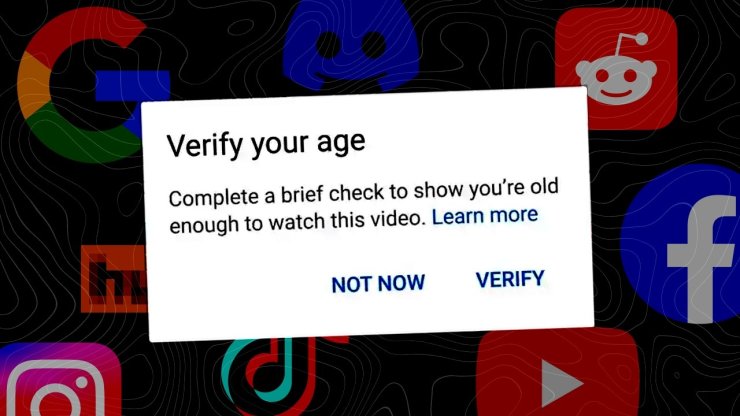
The Global Wave of "Age Assurance" Laws
This is not theoretical. It is happening now.
In the United Kingdom, the Online Safety Act (enforced from mid-2025) forces online services hosting "harmful" content for children - including pornography and much user-generated material - to implement "highly effective" age checks. These often involve uploading government IDs, credit card details, or submitting to facial scans and AI estimation.
Users who resist turn to VPNs in droves. Privacy groups warn that once the infrastructure exists, it will expand.
Australia banned social media accounts for under-16s in late 2025. Platforms (Instagram, TikTok, YouTube, X, Reddit, etc.) must use age assurance tools to block minors, deactivate accounts, and prevent new sign-ups - or face massive fines. Research already shows teens losing access to news and information.
In the United States, roughly half the states have passed or are advancing laws requiring age verification for adult content sites, gaming, and increasingly social media. The Supreme Court upheld Texas's porn age-verification law. Federal efforts like the KIDS Act (which passed the House in 2026) create "duty of care" obligations that critics say will force platforms to verify ages across services to avoid liability.
Even if bills claim they do not mandate ID checks, the legal risk pushes companies toward them: "We don't know who is a minor unless we check everyone."
The European Union's Digital Services Act (DSA) requires platforms to protect minors and assess systemic risks. Combined with pushes for an EU Digital Identity Wallet and age-verification apps, it creates a framework for seamless, government-linked age gating. Older proposals around child sexual abuse material (CSAR/"chat control") explicitly floated mandatory age verification for messaging apps.
Similar moves are underway in Brazil, Indonesia, Malaysia, and elsewhere. The pattern is global and accelerating.
Big Tech's Role: Compliance, Tools, and Lobbying
Big Tech is not a passive victim. Companies like Meta, Microsoft, Google, Apple, and others are:
Developing or partnering on age-estimation AI and verification systems.
Implementing these features (sometimes with backlash - Discord delayed global rollout after user outrage over facial scans).
Lobbying for or supporting safety bills that create regulatory moats or safe harbors while expanding data practices.
Some disclosures show major tech firms lobbying alongside or for elements of U.S. kids' safety packages. They gain by becoming the gatekeepers and data processors. Smaller platforms struggle with compliance costs, further concentrating power in the hands of the biggest players.
The result: Adults worldwide now routinely face age gates on porn sites, certain social features, gaming, and more. To prove you are 18+, you scan your driver's license or passport, or let an AI analyze your face. That data goes to third-party verifiers - new honeypots for hackers and government requests.
The Slippery Slope to Mandatory ID for the Entire Internet
Start with "just porn" or "just social media for kids." Then expand to any content "harmful to minors" (a definition that grows). Platforms, facing strict liability, over-moderate or require verification everywhere to be safe.
Facial age estimation is marketed as "privacy-preserving" because it supposedly doesn't store your face - but it still processes biometrics and creates persistent signals. Full ID upload links your online activity directly to your government identity.
Once the systems exist, expanding them is trivial. Want to access certain news, forums, encrypted apps, or political content? Verify your age/ID. Want to create multiple accounts or use privacy tools? Suspicious - flag it.
This destroys the core promise of the internet: the ability to speak, research, organize, and explore without your real name attached. Journalists, activists, victims of abuse, LGBTQ+ youth, political dissidents, and ordinary people with unpopular views all lose.
Anonymity is not a bug - it is a feature that enabled much of the internet's greatest value.
Real Problems, Wrong "Solutions"
Children do face real harms online: grooming, CSAM, addictive design, exposure to extreme content. These deserve serious responses.
But mandatory universal age verification and identity linkage are blunt, ineffective, and dangerous tools. Kids bypass them with VPNs, fake mustaches for face scans, borrowed IDs, or just lying about age. Adults lose privacy and convenience. Data gets breached (as seen in past verification vendor incidents). The systems create massive new surveillance capabilities for both corporations and governments.
Privacy advocates at organizations like the EFF argue these "age gates" are a growing global threat that compounds censorship with surveillance.
True solutions exist that do not require turning the internet into a permissioned, identified space: better age-appropriate design defaults, robust parental controls that stay in the family, strong encryption, targeted law enforcement against actual criminals, digital literacy education, and holding platforms accountable for known harmful features without forcing mass identification.
The Stakes Could Not Be Higher
We are watching the construction of the infrastructure for a post-anonymous internet. Once every major service requires proof of identity to function normally, the old free internet is gone. "Child safety" has become the perfect Trojan horse - emotionally irresistible, hard to oppose publicly, and perfectly suited to justify permanent surveillance.
Big corporations get more user data and regulatory barriers against competitors. Governments get unprecedented visibility into citizens' online lives. Ordinary people get less freedom.
The internet as we knew it - open, pseudonymous, permissionless - is being dismantled piece by piece under the banner of protecting children. If we do not push back hard with better alternatives and fierce defense of privacy and anonymity, the "solution" will be far worse than the problem it claims to solve.
The choice is stark: reclaim a free internet, or accept a surveilled one where showing your government ID becomes the price of entry. The window to choose is closing fast.










Comments