Fire Emblem has spent more than three decades refining the same loop: move units on a grid, weigh risk against reward, and live with the cost. Fire Emblem: Fortune's Weave, the eighteenth mainline entry and the first for Nintendo Switch 2, does not abandon that loop. It multiplies it.
Released on September 17, 2026, the game sits at an 89 Metacritic score, tying Three Houses as the second-highest-rated entry in the franchise after Awakening. IGN gave it a 10. GameSpot called it the series' new peak. Those scores help, but they are not the whole case. Here are five reasons Fortune's Weave feels like the game Intelligent Systems has been building toward for years.
1. It tells four complete stories and then braids them into a fifth
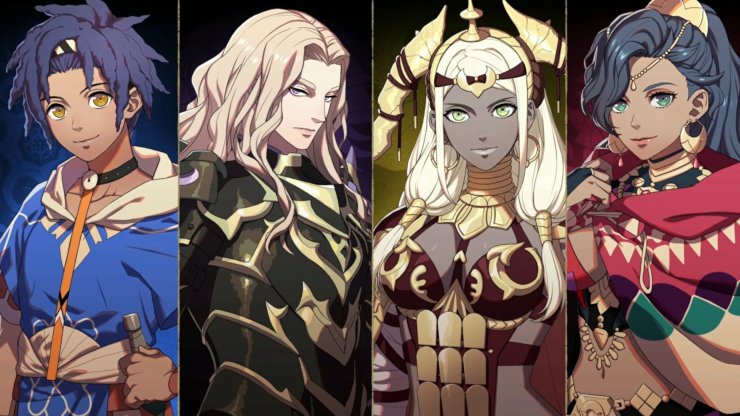
Most Fire Emblem games ask you to pick a path. Fortune's Weave asks you to live several lives at once.
You begin in a ruined future as Eshmel, a customizable hero summoned by Sothis and guided by Fortuna. The demon god Balor has already won. Your task is to travel back five years and change the Heroic Games, a tournament in the Dagdan capital of Dagsion whose winner is granted one wish. The four competitors you must protect are the Flame Lords: Cai, Dietrich, Theodora, and Leda. Each has a full campaign that can stand alone. Played together, those campaigns form one interlocking story that only becomes clear after you have seen the same events from four angles.
You can finish one route and jump to another, skip ahead, or replay chapters to recruit someone you missed. Later acts collapse the separate threads into a larger war and a final reckoning. Few games this large withhold information this long and still make the payoff feel earned.
2. The Flame Lords are the strongest lead cast the series has written
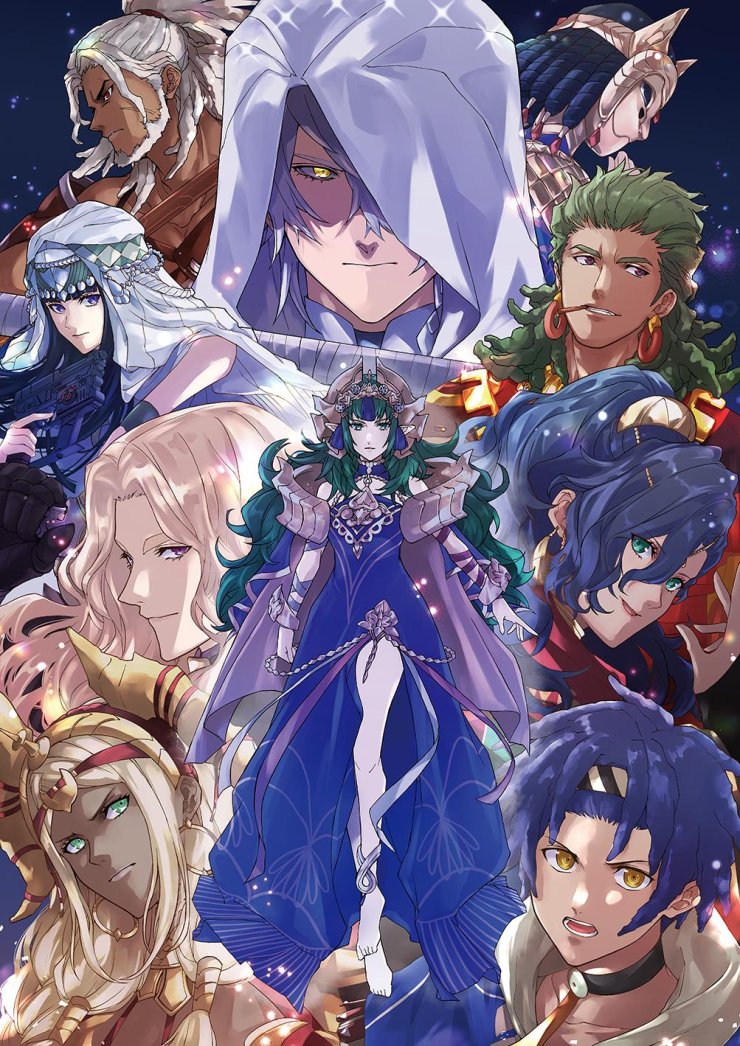
Cai wants to save his father from execution. Dietrich, a noble swordsman from Fodlan, wants worthy opponents. Theodora, queen of Saramis, wants to restore her people's pride. Leda, a dancer with a hidden past, wants revenge for her father's murder. The premises are familiar. The writing is not.
Each lord is allowed to be obsessive, flawed, and sometimes unlikable. Their supporting casts feel distinct. Supports do more than raise hit rates. They show how four people see the same empire and the same coming disaster. Any one of these campaigns could have carried a full Fire Emblem. Giving you all four, then asking you to hold them at once, is the source of the game's emotional weight.
Eshmel is not a blank self-insert. The White Raven arrives from a future that has already failed, carrying knowledge the Flame Lords do not have. That gap, between the person who knows too much and the four who still think they can win on their own terms, gives the story a melancholy the series has rarely sustained.
3. The combat synthesizes three decades of design and then adds new layers
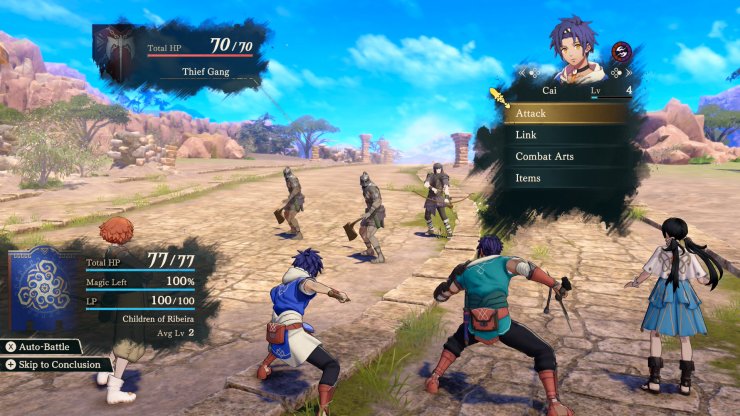
Fortune's Weave takes the calendar and hub systems of Three Houses, the map design of Engage, and the dungeon exploration of Echoes: Shadows of Valentia, then splits combat into two modes that feed each other.
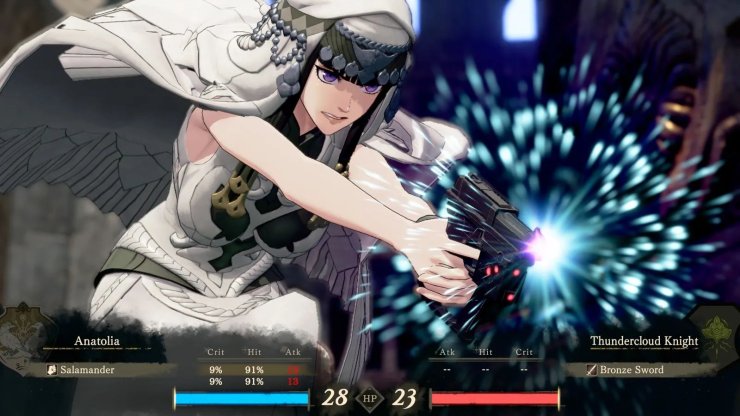
Arena Matches are classic grid tactics, with flanking, weapon durability, Combat Arts, and Blaze Arts: personal techniques that cost health. Spend too freely and a unit's HP is halved for the rest of the fight. Outside the capital, Clashes become smaller party-based dungeon fights with combination attacks. The world map is larger than Garreg Mach, and time actually matters. You cannot farm forever.
Maps work as puzzles more than stat checks. Objectives change. Terrain matters. Character skills are tied to identity rather than generic bonuses. The result rewards planning, improvisation, and the old Fire Emblem willingness to risk a unit for one decisive turn. After thirty-plus years, that loop finally feels this complete.
4. Dagda is the most distinctive setting the series has produced in a generation
Three Houses gave players Fodlan, a land of churches, crests, and ordered houses. Fortune's Weave moves south to the Dagdan Empire, a Mediterranean-inspired continent of arenas, temples, bordered kingdoms, and a capital that feels public and alive. The art leans into color and fabric. The music mixes orchestral themes with flamenco and older motifs. The tone is warmer than the 2019 academy, even as the plot grows darker.
Dagsion is a real hub. You recruit in the streets, train in the arena, visit temples, and watch the calendar tick toward the next match. Beyond the walls, the map offers skirmishes, vendors, and dungeons that feed the main campaigns. The setting explains why these four people would cross an empire for a wish, and why that tournament later looks like the last moment anyone still believed the world could be saved.
5. Switch 2 finally lets Fire Emblem look and sound as large as it always wanted to feel
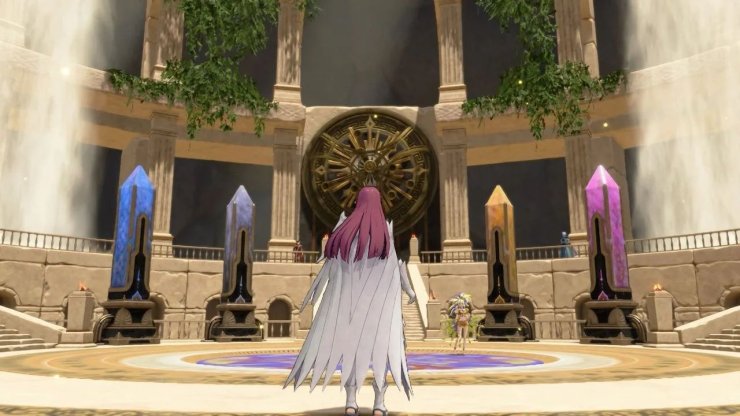
This is the best-looking and best-sounding Fire Emblem to date. Models carry detail that used to live only in key art. Cutscenes have weight. Load times are nearly instant. Cities feel populated. Class designs stay handsome no matter how you reclass a unit. The score lodges in your head. The voice acting is steady enough that the writing takes over.
None of that would matter if the game were thin. It is not. A thorough playthrough can pass 100 hours, and chasing every route and dungeon can push past 150. The scale would crush a weaker production. Here the production rises to meet it.
That is the case for calling Fortune's Weave the best Fire Emblem yet. Awakening saved the series with charm. Three Houses delivered political tragedy. Engage sharpened the tactics. This game keeps those strengths and refuses to choose between them. It is not small and it is not tidy. It treats the player's time as something worth weaving. For a series built on the cost of one decision on a grid, that is the right kind of ambition.






Comments