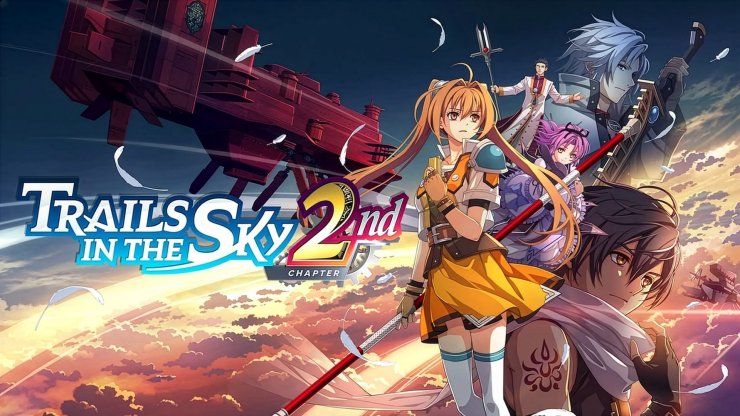
A year after Trails in the Sky 1st Chapter proved that Falcom’s Liberl saga could be reborn without losing its soul, the remake of Second Chapter arrives with a simpler brief and a heavier one. It has to follow one of the strongest JRPG remakes in years, pick up immediately after a cliffhanger that still stings, and justify another 60 to 100 hours in the same kingdom. Early reactions from critics and players on X have been strikingly consistent. This is not a radical reinvention. It is a victory lap that earns the extra mileage.
The game launches September 17, 2026 on PlayStation 5, Nintendo Switch, Switch 2, and PC. It is a full 3D remake of Trails in the Sky SC, not a coat of paint. Clear data from 1st Chapter carries over for bonuses. Playing the first remake first is not optional in any meaningful sense. This story starts in the wreckage of that ending.
The story is the whole point
Estelle Bright is looking for Joshua. That is the hook, and it is enough. After the first game’s farewell, she sets out across Liberl with a harmonica, a stubborn heart, and a growing list of allies. The secret society Ouroboros stops being a rumor and becomes a presence. Political intrigue tightens. Familiar towns return in a new order. New faces join the party and old ones get more room to breathe.
Reviewers keep circling the same idea. 1st Chapter was the charming setup. 2nd Chapter is the payoff. Estelle’s coming-of-age arc is the spine. Her search is not just a plot device. It is a character study about trust, independence, and what it costs to grow up next to someone who was never only who you thought they were. Several writers called it one of Falcom’s best character dramas, and that praise is not casual. The remake’s animated cutscenes and expressive models do a lot of the lifting. Moments that used to live in portraits and text now play on faces.
The back half is where the game stops being polite. Once Ouroboros’ plan takes shape, the pacing snaps. What some described as a slow, even repetitive opening gives way to a long stretch of tension that feels like a game and a half compressed into a crescendo. That shape matches the original SC, but the presentation makes the emotional beats land harder. Voice acting is a major reason. English and Japanese tracks are both available, and the English cast in particular has been praised for making the ensemble feel lived-in rather than reciting lines over a remaster.
There are small script adjustments that nod toward later Trails games. They do not rewrite the story. They just make the Liberl arc sit more comfortably inside the larger series. For newcomers who started with the 2025 remake, that extra context is a gift. For veterans, the remake is still the same journey they remember, just louder, warmer, and easier to fall into.
Combat that already worked, now a little sharper
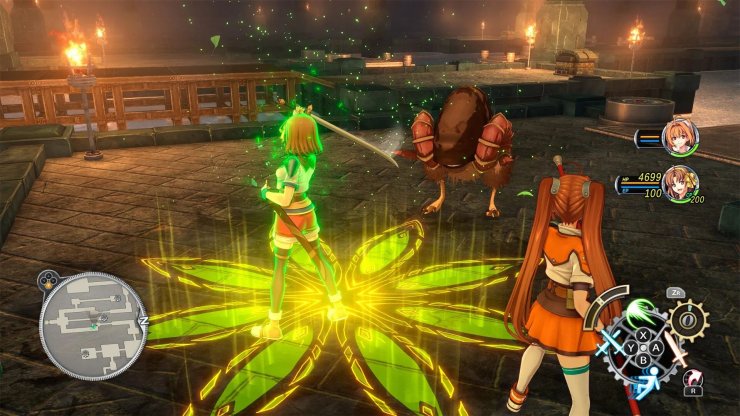
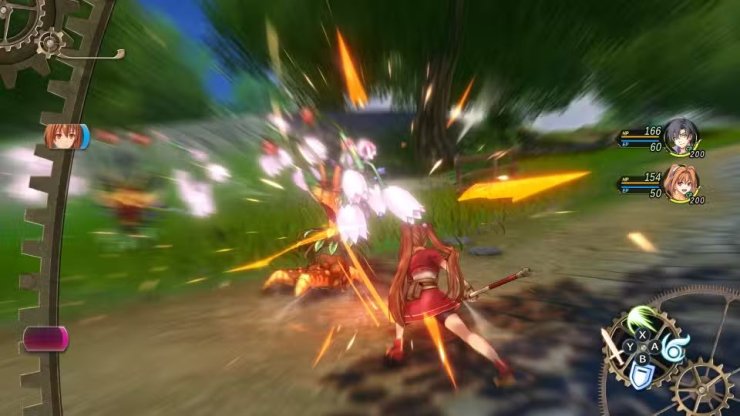
If you played 1st Chapter, you already know how this feels. Exploration and battles are roughly 95 percent the same systems. That is not a dunk. Most reviews treat it as a compliment. The hybrid of Quick Battle and Command Battle returns. Brave Points still fuel follow-ups, chains, and party bursts. New Crafts and S-Crafts give the roster more personality. Bosses get S-Breaks. Brave Rush lets two characters spend Brave Gauge for a wide combo in the action layer. Enforcers of Ouroboros get their own prolonged boost state that changes the battlefield and raises the temperature of those fights.
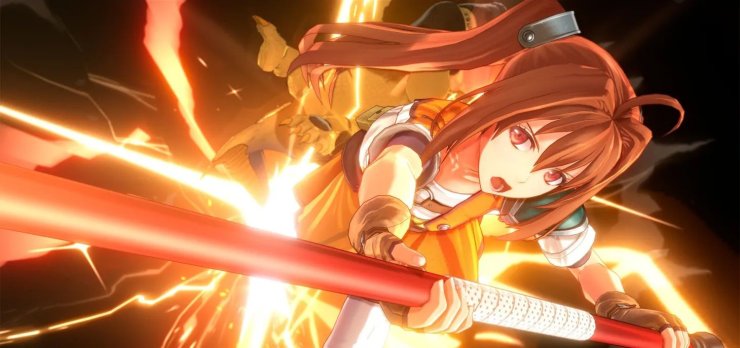
Party management is better this time. Characters still rotate in the classic Trails way, but the sequel gives you a more consistent core and actual choice earlier on, including a fork between two semi-permanent members. Animations for crafts and arts look more expensive. The tactical loop is still the draw: positioning, delay, orbment setups, and the satisfaction of a plan that clicks.
The additions are meaningful rather than flashy. An expanded fishing minigame is an easy time sink. Poker shows up in side content. Cooking with companions returns as texture. Bracer requests are widely considered an upgrade, with more puzzle-like jobs: a lighthouse manual, a criminal investigation, a poker match you can actually fail. That last detail matters. Side content in 2nd Chapter has more teeth than “talk to NPC, walk to marker.”
The flip side is familiarity. This remake does not reinvent the series the way 1st Chapter did. It inherits a formula that already felt modern and polishes it. If you wanted a new battle identity, you will not find one. If you wanted the same excellent combat with better animations, more party flexibility, and nastier bosses, you are covered.
Liberl, again, but brighter
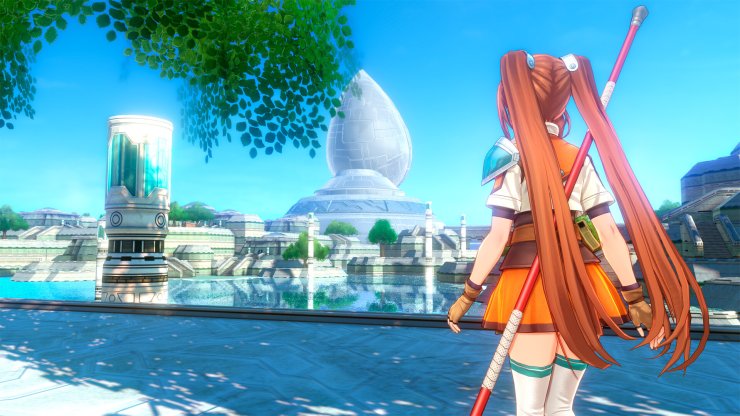
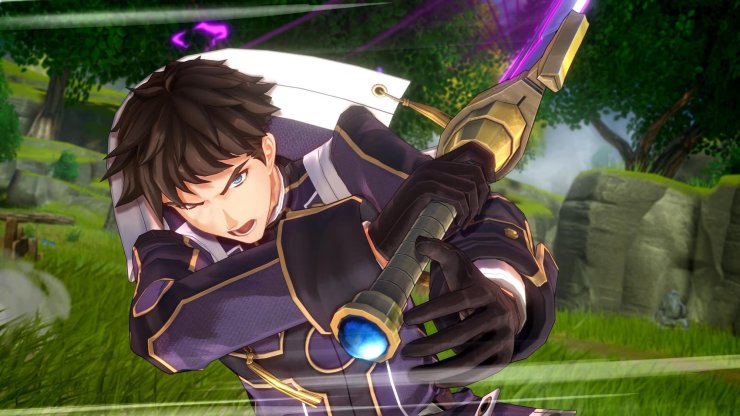
Visually the remake continues the 1st Chapter look: full 3D towns, richer lighting, and character models that sell comedy and heartbreak in the same conversation. Falcom’s art direction still favors charm over photorealism, which suits a story this earnest. Cutscenes are the star. Several reviews singled them out as the reason old scenes now feel new.
Not every environment keeps up. A recurring note is that some areas look comparatively empty next to the cast. You revisit a lot of the same cities and roads, just in a different sequence. That can feel like a rerun in the early hours, especially if 1st Chapter is still fresh. Performance, at least on the versions critics used, is not the story. Switch 2 in particular has been called a clean port in both docked and handheld setups.
The soundtrack is another consensus win. Falcom’s music was already a reason people put up with long dungeons. The remake’s soundscape, whether newly arranged or simply better presented, keeps doing that work. Partial voice acting in some scenes is one of the few presentation complaints that keeps coming up. The big moments are voiced. Not every corridor conversation is.
Where it stumbles
The criticisms are narrow and they rhyme across outlets and social posts.
The opening can drag. Estelle without Joshua is the point of the first act, but some players feel the pair’s chemistry was the first remake’s secret weapon and miss it until the plot allows it back. Dungeons occasionally overstay. Dated JRPG structure still peeks through: long corridors, repeated locales, a little too much hand-holding in spots. There is not a huge incentive to constantly swap the whole roster once you find a team you like. The game is large. Plan for something in the 80-hour range if you poke at side content, longer if you are a completionist.
None of those notes dominate the conversation. They read like the cost of a faithful remake of a mid-2000s epic, not like broken systems. The loudest public reaction on X has been score-watching. Early tallies clustered in the low 90s, with a stack of 9s and a surprising number of perfect 10s from RPG-focused outlets. People are treating this as one of 2026’s best-reviewed games, which is a strange and delightful place for a 20-year-old cult sequel to sit.
Who this is for
If you finished 1st Chapter and felt that last scene in your chest, this is the game you have been waiting for. If you have never touched Trails and somehow landed here first, turn around and play the 2025 remake. The sequel assumes you know these people.
Series veterans who bounced off older ports finally have a version of SC that looks and plays like a modern Falcom game while keeping the plot intact. Newcomers who caught the bug last year get the better half of the Liberl story with the same quality-of-life floor: readable UI, modern combat options, and a cast that talks like they mean it.
2nd Chapter is not trying to be the shock of the first remake. It is trying to be the reason that remake existed. On that score, the early consensus is almost greedy in its praise. Direct sequels rarely feel this complete. Estelle’s story, given faces, voices, and a second chance at the same roads, is the best argument yet that the Sky remakes are not just preservation. They are the new default way to meet this series.
For anyone who already loves these characters, the recommendation is simple. Go find Joshua. The road is long, the towns are familiar, and the last stretch is worth every hour.




Comments