Fire Emblem: Fortune's Weave is the kind of game that makes a calendar look like a threat. Intelligent Systems and Nintendo have shipped their first mainline entry for Switch 2 as a four-campaign tactical epic set in the same world as Three Houses, and the early consensus is that it is one of the most ambitious strategy RPGs in years. It is also one of the longest. That combination is the whole conversation.
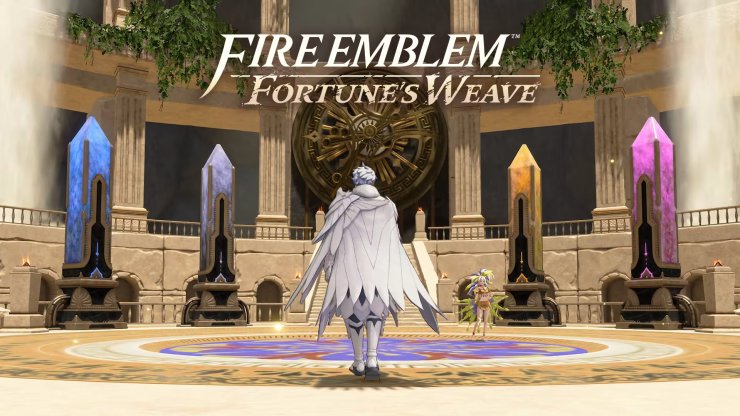
The story begins in the Dagdan Empire, south of Fodlan, during the Heroic Games in the capital of Dagsion. Four warriors enter the tournament hoping the prize will grant their heart's desire. Cai wants to free his father from a false imprisonment. Dietrich wants the hardest fights he can find. Theodora, a newly crowned warrior queen, wants justice for her people. Leda, a dancer and refugee, wants revenge. You can also create Eshmel, a customizable soul sent by Sothis, who can slip between their stories and eventually pull those threads toward a shared climax against the demon god Balor.
That structure is the hook. Fortune's Weave does not lock you into one route and ask you to replay the whole campaign later. It lets you hop between the Flame Lords, often from a single save, so events in one story change how you understand another. The first stretch is four overlapping campaigns around the same year of the Games. Later, a timeskip widens the map and raises the stakes. When it works, the game feels less like four sequels taped together and more like a single tapestry you keep turning over.
Online talk has already split along a familiar Fire Emblem line. Players who live for grid puzzles are celebrating some of the sharpest maps the series has produced. Players who bounce off monastery busywork are warning that the game can bury its best ideas under calendars, gifts, support ranks, and travel. Both readings are fair.
Four lords, one war
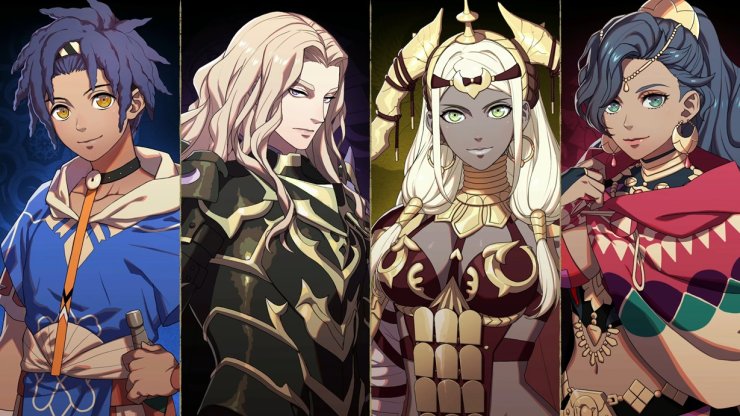
The four leads are the reason the premise holds. Cai's campaign has the earnest, almost fairy-tale momentum of a kid trying to put a broken family back together. Dietrich's path is colder and more self-interested, built around a swordsman who treats the Games like a proving ground. Theodora's story is the one many early players are calling the standout, a political and personal reckoning that gives the empire real weight. Leda's route is the most intimate and the most bitter, a revenge tale that keeps circling the same wound.
Eshmel is the glue. The avatar is not just a silent bystander. The character appears at key moments to nudge fate, recruit units, and eventually bind the four campaigns into one last act. That last act is where the game stops feeling like a tournament sim and starts feeling like a rescue mission across time.
The supporting cast is large even by modern Fire Emblem standards. Recruitment is generous. Supports still matter for combat bonuses and for the soap opera that has defined the series since Awakening. The writing is stronger when it stays close to the lords and thinner when it stretches to fill every side conversation in Dagsion. That is a common complaint: the main characters are excellent, and the crowd around them is uneven.
Combat that still feels like Fire Emblem, only denser
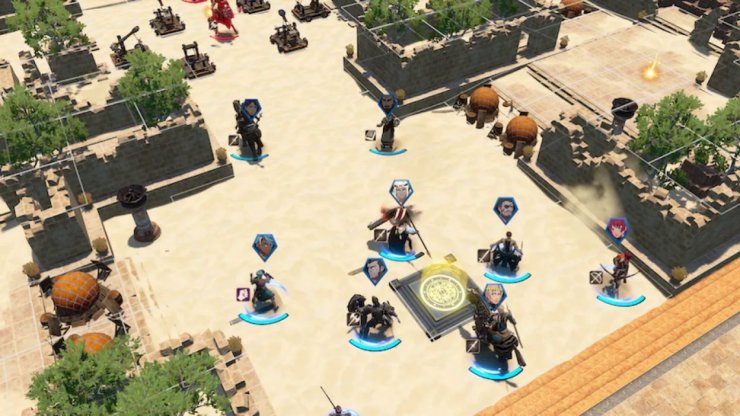
On the battlefield, Fortune's Weave is a refinement of Three Houses with a cleaner sense of map design borrowed from Engage and a second combat layer pulled from Echoes. Arena and story battles use the classic grid. Missions outside the capital can shift into party-based encounters on a world map full of dungeons, skirmishes, and monster hunts.
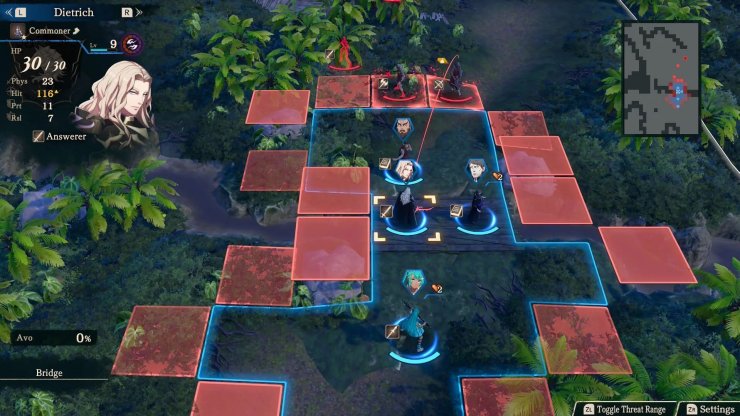
Blaze Arts are the flashiest new toy. The Flame Lords can spend health to fire off unique map abilities, then ride a gauge that pays off until it overheats and slashes their remaining HP. It is a high-risk button that makes bosses and tournament set pieces feel theatrical without turning every chapter into a cutscene. Combat Arts, gambits, mounts, magic, and a wide class tree sit underneath that system. Classes run from familiar knights and bishops to charioteers, elephant riders, and other Dagdan flourishes that match the Mediterranean-inspired setting.
The best maps are puzzles. They ask you to think about positioning, timing, and which lord's toolkit you brought into the fight. The worst maps are the ones that exist to eat calendar days. Dungeons in particular get called repetitive. The Clash system, a extra wrinkle some reviews singled out, has not won many fans.
Quality-of-life options are plentiful. Infinite rewinds make the game far more forgiving than old permadeath entries. That is a gift for newcomers and a softener for veterans who miss the old tension. Hard mode still has teeth if you want it. The game never hides that it would rather you experiment than restart a 40-hour file because one unit walked one tile too far.
The hours between battles
This is where Fortune's Weave becomes either a dream or a second job. Dagsion is a huge hub. You train, feast, shop, give gifts, chase sidequests, and watch the tournament calendar tick toward the next qualifier. Then you leave the walls and roam Dagda, which is bigger than Garreg Mach ever felt.
The loop is addictive if you like systems. You build teams, chase class promotions, and watch the same year unfold from different chairs. Progress on one path can ease another, which is a smart way to keep a 100-hour game from feeling like four isolated novels. The loop is exhausting if you mainly want maps. Support grinding is still a chore. World map movement can feel clunky. Menus are busy. Late-game pacing sags when the game keeps asking you to manage one more route, one more dungeon, one more relationship rank before the story will move.
That split is already showing up on X. Some players are vanishing for the weekend with a grin. Others are staring at the runtime estimates, which range from a focused 70 hours to well past 120 if you chase everything, and asking whether the extra systems are depth or padding. The honest answer is both. The game is stuffed on purpose. It rarely feels empty. It sometimes feels unwilling to end a sentence.
Looks, sound, and the Switch 2 question
Presentation is a high point for a lot of players. Character art is rich, the lords are instantly readable, and the soundtrack is one of the series' most varied in years. The 3D models and combat animations give the tournament a sense of spectacle that Three Houses never quite reached.
The world itself is more mixed. Dagda looks handsome in key art and a little dated in some overworld stretches. A few voices online expected the Switch 2 version to look more next-generation than it does. Performance talk is quieter than the design talk, which is usually a good sign on launch week, but this is not the game you buy to show off the hardware. It is the game you buy to disappear into for a month.
The verdict the internet has already started arguing about
Fortune's Weave is being received as a return to the sweeping, character-heavy Fire Emblem that made Three Houses a phenomenon, with combat that many consider the best the series has ever had. It is also being received as a maximalist experiment that can overwhelm people who wanted a tighter tactics game after Engage.
If you want interlocking stories, a stacked cast, and dozens of ways to build a team, this is an easy recommendation. If you bounce off social sims, calendars, and games that treat 100 hours as a starting point, go in with a plan. Pick one lord first. Ignore half the side content. Let the tournament do the talking.
The title is doing what it promised. It weaves four fortunes into one war, then asks whether you have the time to watch every thread pull taut. For a huge number of players, the answer is already yes. For everyone else, the warning is simple. This game will take as much of your life as you are willing to give it, and it is good enough that you might not notice until the calendar in Dagsion and the calendar on your wall start looking the same.




Comments