In 2024, Nintendo declared war on Switch emulators.
The Crackdown Timeline
- March 4, 2024: Tropic Haze (behind the popular open-source emulator Yuzu) settled a lawsuit with Nintendo. It paid $2.4 million, deleted its code, surrendered the yuzu-emu.org domain, and agreed to stop all related work, including on the 3DS emulator Citra.
- May 2024: Nintendo filed DMCA notices that led GitHub to wipe 8,535 repositories tied to Yuzu code and forks in a single sweep, treating the entire network as infringing.
- October 1, 2024: Ryujinx followed. Its lead developer, gdkchan, was contacted by Nintendo and offered an agreement to shut down the project. The GitHub organization vanished overnight. Downloads disappeared. A competitor that many hoped might prove harder to touch was gone.
- By 2026: Nintendo had collected millions more across emulator-related settlements and judgments, while continuing waves of takedowns against successor projects. Major Switch emulators as they once existed were effectively dead.
The company had demonstrated that aggressive legal pressure, settlements, and platform-level enforcement could clear the field.
Nintendo still has a problem. His name is Zurdi.
The Manager, Not the Emulator
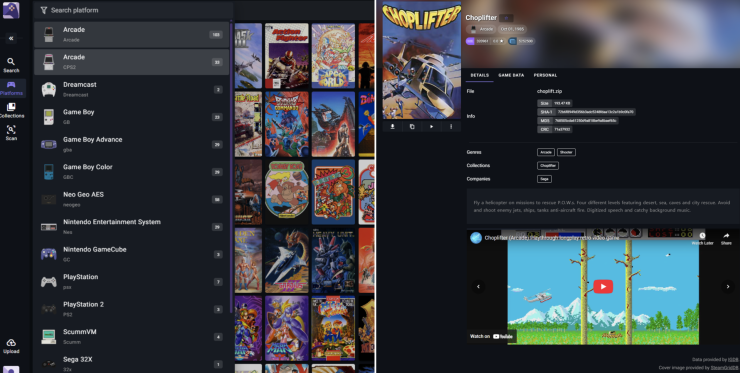
In March 2023—roughly a year before the main campaign against Switch emulators—Zurdi quietly started RomM. It is not an emulator. It is a self-hosted ROM manager and library player.
RomM scans files you already have (the project’s documentation and community emphasize legally dumped ROMs from media you own). It then lets you browse and play many titles in the browser through EmulatorJS (and Ruffle for Flash), with no separate emulator setup required for supported systems.
- Pulls metadata from IGDB, MobyGames, Screenscraper, and other sources
- Fetches box art and artwork from SteamGridDB
- Integrates achievements from RetroAchievements
- Supports multi-disk games, DLCs, ROM hacks, patches, manuals, and tag-based filtering
In January 2025, Nintendo’s own top IP lawyer, Koji Nishiura, publicly clarified the company’s position at a copyright association event: emulators are not inherently illegal. They become problematic when they bypass technical protection measures such as encryption, copy copyrighted console programs, or facilitate access to pirated material.
RomM does not dump keys, crack encryption, or distribute games. It organizes and presents what the user provides. That distinction has kept it in a different category from the projects Nintendo targeted.
What It Actually Does
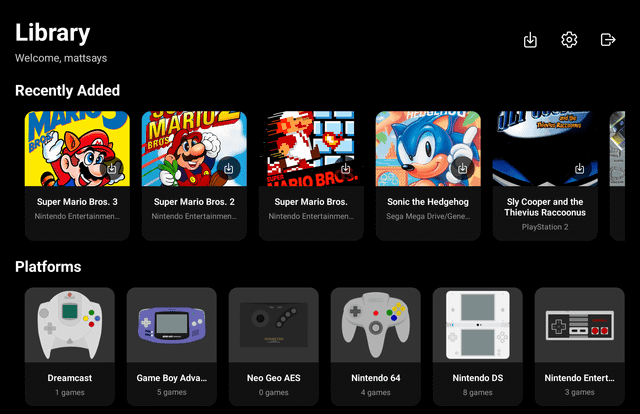
The project, licensed AGPL-3.0 and hosted under the rommapp organization, has grown well beyond its early days. It currently sits above 13,000 GitHub stars and supports metadata for 400+ platforms.
- Users can share libraries with granular permissions
- Official and community clients: Playnite plugin for Windows, Argosy for Android, Grout for muOS and Anbernic-style handhelds
- Integrations and sync options for RetroArch, Steam Deck, and tools like Syncthing
- Saves and states can sync across devices
- Built-in patcher applies hacks and translations on the fly
- Designed for self-hosting: Docker, clear documentation, no tracking, no paid tiers
It reached the front page of Hacker News. Development continues actively into late 2026, with regular releases, community contributions, and an ecosystem of related tools.
Zurdi started it as a personal self-hosted solution when existing options were limited or architecture-constrained. It attracted collaborators through Discord and grew into a small team focused on preservation and control of one’s own library.
The Ownership Gap
The contrast is straightforward.
- Sony’s closure of the PS3, PSP, and Vita stores in 2021 removed the ability to purchase roughly 2,000 digital-only titles across those platforms, with more than a hundred exclusives effectively vanishing from any new-purchase channel.
- Nintendo spent years and millions neutralizing the primary tools people used to play Switch software outside official hardware and stores.
Digital libraries have repeatedly proven conditional. Stores close. Emulators that cross certain technical lines get sued or pressured into silence. What remains is whatever individuals can keep under their own control.
RomM does not claim to solve piracy or replace official platforms. It is infrastructure for people who already own the files and want a clean, metadata-rich, multi-device way to manage and access them—including systems Nintendo and others no longer actively support or sell.
In a period when major console makers have shown they will act decisively against tools that enable unauthorized access, a project that stays on the management side of the line has continued to expand.
Two developers and a growing community in a Discord server built something the takedowns have not erased: a practical, open-source museum for collections people already possess. As long as the files stay in the hands of their owners and the software avoids the circumvention lines Nintendo has drawn, that archive is harder to unmake.







Comments