PlayStation players worldwide have begun a coordinated week-long boycott known as #PSBlackout, protesting Sony's plan to end physical disc production for new games starting in January 2028. The action, which started at 7:00 PM local time on Sunday, August 23, 2026, and runs through 7:00 PM local time on Sunday, August 30, calls on participants to power down their consoles, log out of PlayStation Network accounts, and make no purchases related to PlayStation platforms.
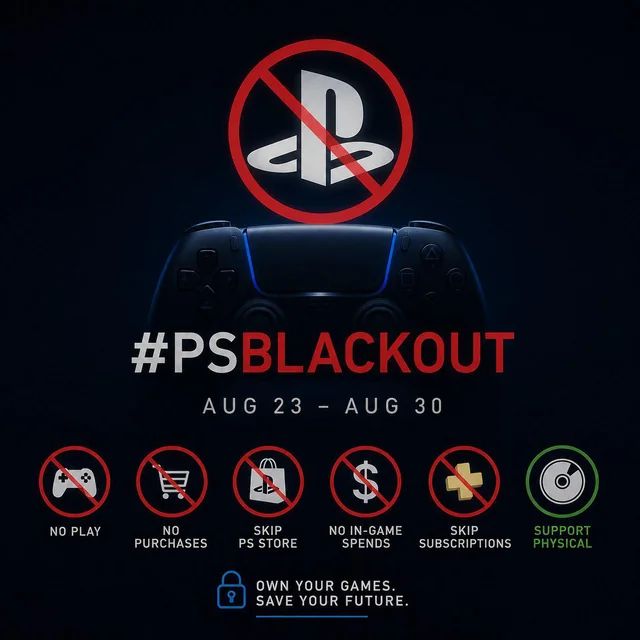
The #PSBlackout Campaign
The campaign was organized by the game-preservation group Does It Play?, which described the move as giving Sony "a small taste of their own medicine." Supporters are asked to avoid all gameplay sessions, logins, and spending on games, downloadable content, subscriptions, or other PlayStation products during the seven-day period. Organizers said the timing aims to minimize disruption for publishers and developers while still allowing players to make their voices heard.
Sony's Disc Phase-Out Decision
Sony announced the disc phase-out on July 1, 2026. From January 2028 onward, new games on PlayStation consoles will be available only in digital formats through the PlayStation Store and retailers. Titles released or scheduled for release on disc before that date remain unaffected, and publishers can continue reordering physical copies of those existing games. Sony cited shifting consumer preferences, noting that digital downloads accounted for about 78 percent of full-game sales in its most recent fiscal year. The company has also pointed to broader industry trends away from physical media.
Community Concerns and Petition
Critics argue the decision undermines game ownership, preservation, and the second-hand market. Physical discs allow lending, trading, reselling, gifting, and long-term collecting in ways digital licenses do not, they say. A Change.org petition titled "Don’t Kill the Disc" has gathered more than 345,000 verified signatures. Many participants also point to additional frustrations with Sony, including the closure of studios such as Bluepoint and Japan Studio, price increases, the winding down of PS VR2 support, canceled fan events, and the removal of licensed content from user libraries.
Sony's Stance and What Comes Next

Sony has acknowledged the backlash but indicated it intends to move forward carefully with the transition. Company executives have described the shift as an adaptation to how most players already access games rather than a sudden change forced on the community. Physical media now represents a small and declining share of overall software revenue, and a significant portion of PS5 consoles sold lack disc drives.
As the blackout gets underway, participation levels remain difficult to measure in real time. Social media activity under the #PSBlackout hashtag has been steady, with some content creators and preservation advocates publicly committing to the protest. Skeptics question whether a single week of reduced activity will register meaningfully against PlayStation Network’s large user base of more than 100 million accounts. Others suggest longer-term actions, such as subscription cancellations or sustained shifts toward physical purchases where still available, could prove more effective.
The protest highlights ongoing tensions in the industry over digital versus physical distribution, ownership rights, and the future of game preservation. While digital delivery offers convenience and lower manufacturing costs, a vocal segment of the PlayStation community continues to press for options that maintain tangible media. Whether the week-long blackout prompts any policy adjustments from Sony remains to be seen as the action continues through the end of the month.










Comments