On November 4, every character in World of Warcraft: Forever starts with an empty purse, and the bills arrive before the first levels feel earned. Class training comes due, bags fill with loot nobody has priced yet, and the profession recipe you want costs more than you carry. Beta progress will not carry over to the release, so nothing you built beforehand softens that start. Players who spend carelessly in week one often end up farming in week two, when they planned to be questing or running dungeons.
Most launch advice says to save gold and avoid waste, which does not tell you how much to save or what to cut first. This guide builds a written budget in a fixed order: list the expenses, turn them into one shortfall number, cover what you can through play, and only then deal with what is left. For that last gap, a seller's Buy WoW Forever Gold page is one route to explore, with Blizzard's rules and the risks in view. Either way, you finish with a number you can defend instead of a guess.

Write Down Every Cost Between Level 1 and 60
Open a notes file and make four groups: recurring costs, one-time costs, optional costs, and costs you can delay. Recurring costs repeat whatever you do, such as repairs, food and drink, and class reagents. One-time costs include class training, bag upgrades, and profession recipes. Optional costs speed you up instead of keeping you moving, like buying crafted gear from the Auction House. Delayable costs only apply once you reach a milestone, such as mount or riding training at the level it unlocks.
Sort every line by when you will hit it, not by how expensive it feels. A small repair bill paid every few levels can add up to more than one large purchase, and people forget that because each bill is easy to ignore. Next to each line, write the level or activity that triggers it. The date a bill arrives decides how much play time you have to cover it.
Turn Those Costs Into One Shortfall Number
Pick one milestone, such as level 20 or your first dungeon, and add up only the necessary costs before it. Subtract the gold you expect to hold when you get there. The result is your shortfall. Work in milestones because a full-game total is a number nobody can plan around, and prices in a new economy can move within days of launch.
Take a Horde hunter on the PvP ruleset who plans two gathering professions. Necessary costs are training, ammunition, repairs, and a larger bag. The crafted bow from the Auction House is optional. Expected income is quest rewards, vendor sales, and herbs or ore. If that income covers everything except the bag, your shortfall is the price of one bag, which is a manageable and specific number. If a shortfall shows up on nearly every line, the plan is too expensive for that milestone. Cut the optional lines or move the milestone back before you touch anything else. A useful pass signal is a shortfall tied to one or two purchases you can name. A shortfall spread across many small lines means the budget needs another revision.
Close the Gap With Farming and Crafting First
Gathering professions are the cheapest way to shrink a shortfall because crafters need raw materials, and new economies run short of them. Before you craft anything to sell, ask what the raw materials would fetch on their own today. If the materials are worth more than the finished item, sell the materials and skip the crafting. Check the three lowest listings rather than pricing off one, since a single undercutter can make a good item look worthless.
Keep a running tally while you play. After each session, write down the gold you earned, the minutes you spent, and where it came from, whether quests, vendor sales, or gathered materials. Two or three sessions are enough to show which source pays best per hour for your class and professions, and that figure lets you estimate how long the remaining shortfall will take.
Set a time limit before you start. Decide how many sessions you are willing to spend farming for this milestone, and write the number down. Prices drift as more players reach the same professions, so do not assume a herb that sold well on launch day will still sell well on day five. When the limit runs out and the shortfall is still open, stop farming and move to the next decision instead of extending the limit a little at a time.
Decide What to Do With the Remaining Gap
What remains after your farming limit falls into one of two types: a small number you can absorb by trimming optional costs, or a number that would cost you more play time than you want to give. Only the second type needs the steps below.
1. Check the Rules and the Risk
Selling gold for real money happens outside Blizzard's own services, and Blizzard's rules do not permit it, so any account risk is yours to weigh. Read the current rules first and walk away from any seller that asks for your account password. If the risk is more than you would accept, stop here and cut optional lines instead.
2. Match the Order to Your Character
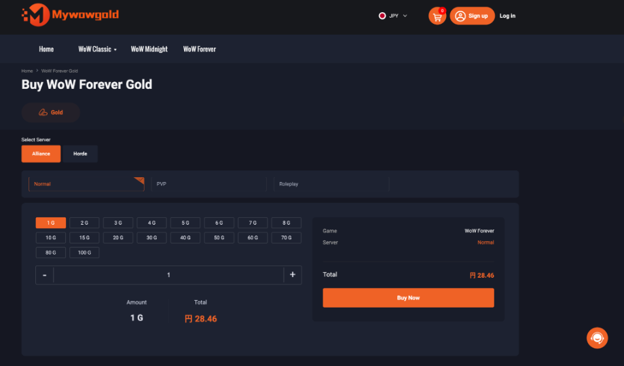
Use this step when the shortfall is a single named purchase, such as that bag or a profession recipe. A listing for WoW Forever Gold lets you choose a ruleset, a faction, and a quantity from preset amounts, and it shows the price and delivery information before you order. Enter the ruleset and faction your character actually plays, since Forever replaces the realm list with rulesets and players cannot group across them. Pick the amount that equals your shortfall, not the largest package, then read the delivery requirements and confirm they ask only for what a handover needs.
3. Verify the Delivery and Reset the Budget
After the gold arrives, check that the balance matches the order and that it landed on the correct character. Spend it first on the item that created the shortfall, then recalculate for the next milestone. Add a short note about what the order covered and how long your farming limit would have taken. That note tells you at the next milestone whether farming or buying cost you more.
Why a Written Budget Beats Launch-Week Guessing
The useful part of this process is the order. Costs sorted by trigger point show you when pressure arrives, a shortfall per milestone turns vague worry into one purchase, and a farming limit stops free time from disappearing. A bag, a recipe, or a training bill each become something you can plan for and compare against what you earn. Each choice, whether to farm, cut a line, or cover a gap another way, is then made against a figure you wrote down yourself.
Keep the same notes file through level 60. After each milestone, update the real totals against your estimate and adjust the next shortfall, because launch prices will settle and your estimates should follow them. By the time group content opens up, you will know which of your assumptions held, which costs repeat, and how much play time you were willing to trade for gold, and that record is worth more than any single launch-week tip.










Comments