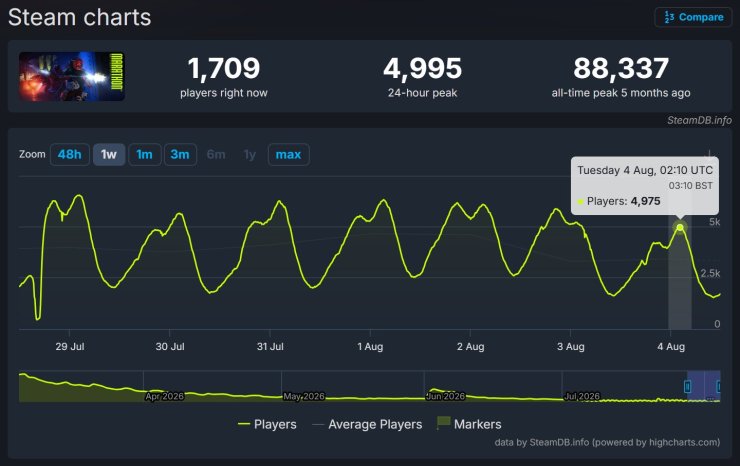
Bungie’s Marathon launched in early March 2026 as a high-stakes extraction shooter backed by a reported development budget exceeding $200 million, and likely approaching or surpassing $250 million before ongoing support costs. Five months later, its Steam concurrent player counts hover around 4,000 on average, with recent 24-hour peaks near 5,000. The all-time Steam peak of roughly 88,000 at launch has evaporated.
Launch Numbers and Rapid Decline
Early sales estimates put total copies sold across platforms at about 1.2 million, with the majority (around 70 percent) on Steam. Base game revenue estimates sat near $40-55 million in the initial period. For a premium-priced live service title from a studio with Bungie’s pedigree and Sony’s backing, those figures fall well short of what was needed to justify the investment or sustain a thriving multiplayer ecosystem.
Steam remains the most transparent platform, and the numbers there tell a clear story of rapid attrition. Seasonal updates and a mid-season PvE mode produced temporary spikes, but the baseline has settled into the low thousands. Destiny 2, even after Bungie wound down major new content support, has frequently drawn far higher concurrent numbers on the same platform.
Design Criticism and Market Response
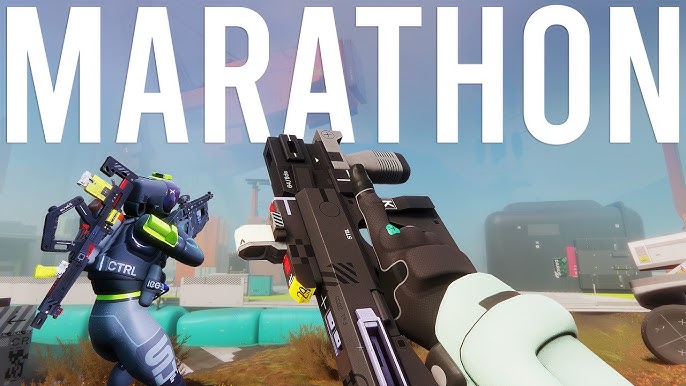
Critics of the game’s performance have pointed to more than just the punishing extraction genre or competition from titles like Arc Raiders. A recurring theme in player discussions has been the art direction and character design. Marathon features stylized robotic Runners with a graphic, high-contrast, often androgynous aesthetic that many described as unappealing or deliberately non-aspirational. Some players and commentators labeled the overall presentation and Bungie’s associated company culture as “woke,” citing the studio’s past DEI initiatives, Pride events, and narrative choices in Destiny. The vibrant, deconstructed visual style marked a sharp departure from the original Marathon games’ industrial sci-fi tone, and the controversy over unauthorized use of an independent artist’s work in early assets did not help public perception.
Whether the label is precise or overstated, the market response is measurable. Games that prioritize certain modern design sensibilities, stylized characters that reject traditional heroic or attractive archetypes, or studio signaling over broad audience appeal have repeatedly underperformed. Concord remains the clearest recent cautionary tale. Marathon’s mostly positive Steam review score near 77 percent shows that a core group of players who stick with it enjoy the gunplay and systems. That does not change the reality of weak retention and limited reach relative to cost.
A Familiar Pattern in Live Service Titles
Live service shooters already face steep challenges: high competition, player fatigue with seasonal wipes and grinds, and the need for constant population density for matchmaking. Layering on design choices that alienate portions of the traditional shooter audience compounds the risk. Developers and publishers who treat core gamer preferences as secondary to internal cultural priorities keep discovering the same outcome. Consumers notice, and they vote with their wallets and their time.
Marathon’s trajectory is not an isolated anomaly. It fits a pattern in which titles perceived as prioritizing messaging or unappealing aesthetics over pure entertainment struggle to convert hype or critical praise into sustained commercial success. The Steam charts for Marathon provide another data point in that ongoing lesson.







Comments