Craps didn’t start in Las Vegas. It goes way back. The game evolved from an old English dice game called “Hazard,” which dates back to medieval times. Hazard was complicated, but French players later simplified it into a version called “crapaud,” which means “toad.” The name came from how players crouched on sidewalks while playing.
When French settlers brought the game to North America, it transformed again. Over time, the rules were simplified further, and modern craps was born in the United States. During the 20th century, casinos refined the layout and betting structure into what we recognize today.
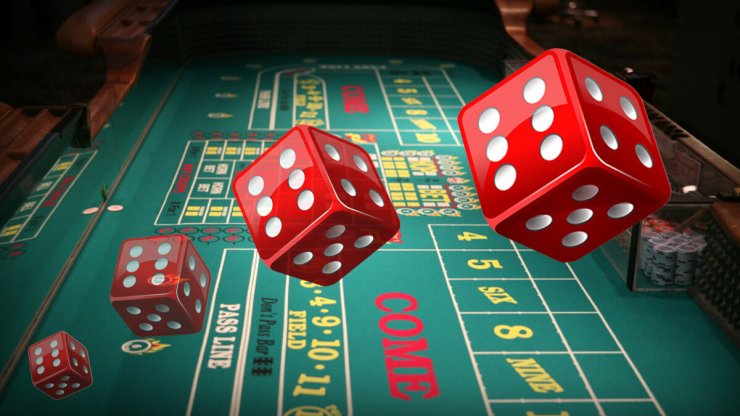
The Rules of Craps
Craps is about predicting the outcome of two dice. Every round begins with the “come-out roll.” This first roll sets the tone.
If the shooter rolls a 7 or 11 on the come-out roll, Pass Line bets win instantly. If they roll a 2, 3, or 12, Pass Line bets lose. If they roll any other number like 4, 5, 6, 8, 9, or 10, that number becomes the “point.”
Once a point is established, the shooter keeps rolling. If the point number appears again before a 7 appears, Pass Line bets win. If a 7 shows up first, the round ends and those bets lose.
Then the cycle resets with a new come-out roll.
Online platforms show all of this clearly. The current point is highlighted. The interface handles the math. You’re just following the flow. First, you can try it for free to test the waters.
Why Craps Feels Complicated
The craps table looks crowded because it offers many betting options. That visual complexity tricks beginners into thinking the game itself is complicated.
But the core mechanic never changes. It’s always the same cycle. Everything else is optional.
Some bets focus on specific numbers appearing next. Some bets focus on whether 7 will appear first. Some bets are single-roll bets that resolve instantly. The variety makes it feel deep, but the engine underneath is consistent.
Tricks in Craps
You’ll hear people talk about dice control, hot streaks, cold tables, lucky shooters, and patterns.
In online craps, especially digital versions, dice are generated by a random number generator. That means each roll is independent. There is no memory. The system does not “owe” you a win. There is no pattern to decode.
In live dealer versions, physical dice are used, but the randomness principle still applies. Past rolls do not influence future rolls.
So the idea of predicting outcomes based on previous rolls is more psychological than mathematical.
Try free craps games to see if there any differences.
The only real “trick” is to choose better bets.
Some have a much lower house edge than others. Pass Line and Don’t Pass bets are among the most reasonable. Adding odds after a point is established reduces the overall house advantage compared to flashy one-roll proposition bets.
Some Advices for New Craps Players
The first piece of advice is to start slow. Watch a few rounds before betting. See how the come-out roll works. See how the point phase works. Don’t rush and better use demo versions of games on Spinarium.
Second, keep your betting structure consistent. Third is to manage your bankroll. Online games move quickly. Faster than physical tables. Without travel time or chip handling, rounds can happen back-to-back.
And finally, set a budget before you start.
Basic Strategy
Pass Line with odds is one of the most balanced approaches. It keeps you aligned with the natural rhythm of the game.
Some players prefer Don’t Pass because it shifts the math in their favor compared to Pass Line alone. But socially, many players prefer cheering for the shooter rather than against them, even online.
The real strategy is both to maximise playtime and minimise unnecessary risk.
Avoid heavy proposition bets unless you’re intentionally playing for short-term excitement. Those bets pay big, but they hit rarely.
Conclusion
Craps started centuries ago as a street dice game and evolved into one of the most recognizable casino experiences. Online, it becomes more approachable, calmer, and easier to learn.












Comments