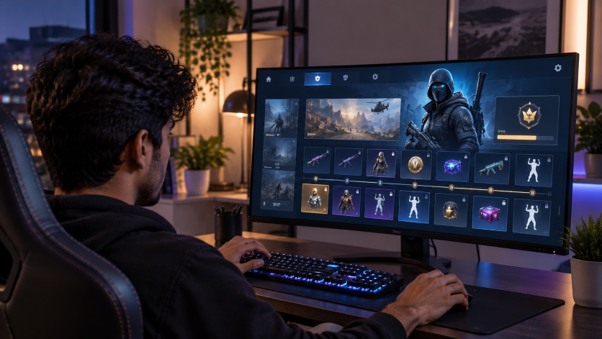
“Free to play” in 2026 usually means the download costs nothing. Many live-service games then build the rest of the experience around a timed battle pass with cosmetics, currency, boosts and seasonal rewards.
That does not automatically make the game bad. Fortnite, Warzone, Valorant, League of Legends and live RPGs all use seasonal systems in different ways. Similar countdowns and reward structures also appear in other digital entertainment, including live casino pakistan platforms and casino game lobbies. The useful question is whether the main game still feels complete when the premium track is ignored.
The Home Screen Shows What Matters Most
The first screens after login can reveal how important the pass is.
If the biggest panels show a season countdown, premium reward track and weekly challenges before the campaign or ranked mode, the season is probably central to the product.
Fortnite, Warzone and many hero shooters use visible seasonal hubs. A stronger sign appears when progression, events and menus all lead back to the same pass.
A campaign-focused game usually gives the main modes priority. A pass-heavy title often places the seasonal track next to the Play button.
Weekly Challenges Put Progress on a Clock
Battle passes need regular progression, and weekly challenges control its pace.
Tasks such as “play three matches with this weapon” or “deal damage in this playlist” differ from a skill tree that can be completed whenever the player chooses. Progress is tied to a week or season.
Genshin Impact, Wuthering Waves and other live RPGs combine persistent worlds with limited banners and battle-pass-style tracks. The map remains available, while some rewards operate on a timer.
The key difference is whether missing several weeks only slows optional rewards or leaves the player behind in important seasonal progression.
Cosmetics and Gameplay Advantages Are Different Products
Not every battle pass sells the same thing.
A cosmetic track may contain skins, charms, banners, emotes or lobby poses. Ignoring those rewards normally does not change the match itself.
Valorant and League of Legends commonly use rewards that are largely cosmetic. The player may look different, but the basic weapon, character or match rules remain the same.
The picture changes when a paid track includes extra XP, additional currency or a faster route toward characters and equipment.
Mobile MOBAs and some mid-core shooters can blur that line with boosts. A reward that speeds up progression is not equivalent to a new outfit.
Multiple Currencies Make the Season Harder to Read
Two currencies are common in free-to-play games: one earned through play and another bought with money.
Some games add a third seasonal currency. A regular coin might buy older cosmetics, premium currency may unlock the current pass, and a temporary event token may disappear when the season ends.
That makes three questions useful: what can each currency buy, does it expire, and can unused value carry over?
A pass may also return part of its price in premium currency. Whether that is enough for the next season depends on the pass price and how much of the track is completed.
Casino Reward Systems Can Use the Same Clock
Timed reward systems are not limited to shooters and RPGs.
Casino platforms can also use login calendars, daily rewards, limited promotions or rotating game events. An instant-casino lobby may show a daily wheel or stamp card, while a video game uses battle-pass XP.
The products are still different. Casino games involve real-money wagering, while a battle pass usually provides access to seasonal progression.
What they share is the timer: both can make a temporary reward highly visible in the interface.
Social Features Can Push the Pass Into Group Play
Battle passes also appear inside multiplayer social systems.
Party bonuses, squad challenges or shared cosmetics can make the seasonal track more visible whenever friends play together.
Cross-play strengthens that effect because one group may include PC, console and mobile users. The same pass can become a shared progression system across all three platforms.
The important question is whether players without it can still join the same matches, use the same modes and continue playing with friends.
Four Signs the Pass Is Central to the Game
A short check can show whether the game is free around its core loop or mainly free at download:
- Can a full match be completed without repeated battle-pass prompts?
- Can the next character or loadout be unlocked without the paid track?
- Does last season’s content remain usable after the timer expires?
- Is the shop or seasonal track one of the first screens after login?
If the paid track controls major progression and dominates the interface, the battle pass is probably part of the main loop rather than an optional extra.
Live-service games in 2026 use both models. Some offer a complete shooter or RPG with cosmetics layered on top. Others make the season itself the centre of progression.
The clearest test is what remains when the premium track is ignored. If the core modes, characters and progression still work, the game is genuinely playable for free. If most of the structure points back to a timed track, the battle pass is doing much more than selling a few skins.










Comments