Short answer: not yet, at least not as a rule. Norway's Gambling Act covers games where you pay a stake, the outcome is random and the prize has economic value. Most loot boxes tick the first two boxes and dodge the third, because the items inside officially can't be cashed out. That gap is exactly what Norwegian regulators and consumer groups have been arguing about since 2018, and a youth survey published in November 2025 has pushed the topic back onto the table, with the gambling regulator saying a full ban is one of the options it is looking at.
If you play FC Ultimate Team, open CS2 cases or spend on character banners, here is how Norway draws the line, who wants to move it, and what the numbers actually say.
The Legal Test: Stake, Chance and a Prize Worth Money
Norway rewrote its gambling law a few years ago. The new Gambling Act (pengespilloven) took effect on 1 January 2023 and replaced older lottery and gaming laws. Its scope is set out in a single sentence in section 2:
"Loven gjelder pengespill der deltakere mot en innsats kan vinne en premie av økonomisk verdi, og resultatet er helt eller delvis tilfeldig." – Pengespilloven § 2, Lovdata
In English: the act applies to games where participants, in return for a stake, can win a prize of economic value, and the result is wholly or partly down to chance. Three conditions, all of which must be met.
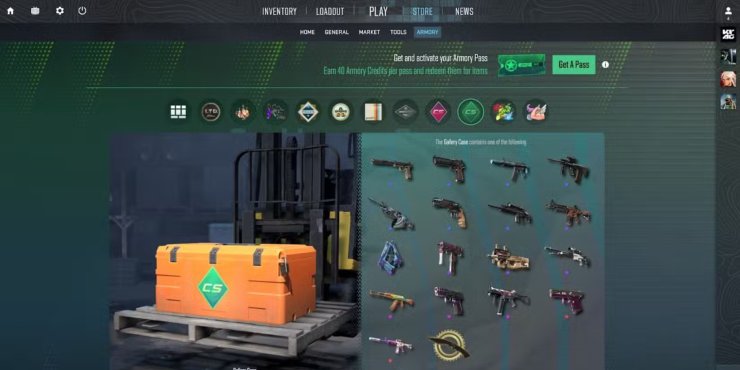
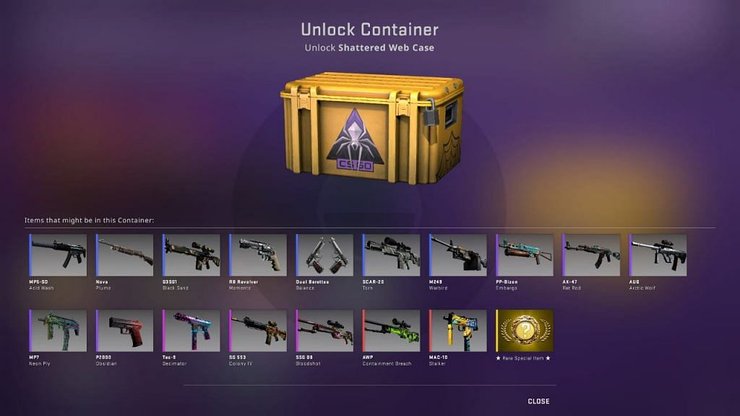
A loot box clearly has a stake, since you pay real money or a premium currency bought with real money. It clearly has chance, since a random number generator picks the item. The argument is all about the prize. A skin locked to your account, with no official way to sell it, has value to you as a player, but it's hard to call that "economic value" in the legal sense. Once items can be traded or sold for money, as with Counter-Strike skins on the Steam Community Market, the case for calling it gambling gets much stronger.
Why a Loot Box Works Like a Digital Scratch Card

The closest gambling product to a loot box isn't really the slot machine. It's the scratch card. With both, you pay up front, and the result is fixed the moment you buy. Everything after that is a reveal. The scratching, or the glowing chest and the slow card flip, changes nothing about what you get. It's there to build tension. If you want to see how the mechanics compare, this explainer on how digital scratch cards decide the result the moment you buy walks through it: the outcome is set by a random number generator at purchase, and each ticket has its own published return percentage in the game's info menu.
That last point is where the two products part ways. A scratch card in a regulated market comes with a prize table and a return figure. A loot box gives you drop rates at best, and no return figure at all, because the items have no fixed price. You can know that a rare skin drops 0.5 percent of the time and still have no idea what you get back for every hundred kroner you spend.
How Norway's Gambling Market Is Built
To understand why loot boxes are such an awkward fit, it helps to know how gambling in Norway is organised. The country runs a state-controlled model. Norsk Tipping, owned by the state, has the exclusive right to lotteries, sports betting, scratch cards and online casino-style games, while Norsk Rikstoto handles horse-race betting. The law's stated goals are to prevent gambling problems, make sure games are run responsibly and safely, and send the surplus to non-profit causes. If you want a broader picture of which game types Norwegians actually play, from lotto and harness racing to odds and casino, there's an overview of how gambling in Norway splits across game types that maps the market in some detail.
Loot boxes sit outside that system entirely. They're sold by game publishers, not by licensed operators, and they're bought by players of every age the game rating allows. That's why the debate in Norway has been driven less by the gambling law itself and more by consumer protection.
The Norwegian Loot Box Timeline
| When | What happened | Source |
|---|---|---|
| September 2018 | Gambling regulators from fifteen European countries, Norway included, announce joint work on the gaming-gambling overlap | Wikipedia, Loot box |
| October 2018 | The Ministry of Culture says it will consider whether loot boxes belong in the new gambling law and asks the gambling regulator for a report | PressFire, 17 Oct 2018 |
| November 2018 | The expert group Forum for spilltrender calls it "in principle unfortunate" to leave loot boxes outside gambling rules | NRK, 29 Nov 2018 |
| May 2022 | The Norwegian Consumer Council publishes "Insert Coin", backed by consumer groups across Europe | Forbrukerrådet |
| 1 January 2023 | The new Gambling Act takes effect, with no section written specifically for loot boxes | Lovdata |
| November 2025 | A survey for the regulator finds 27.7 percent of 12–17-year-olds bought loot boxes in the past year; a ban is among options under review | NRK, 11 Nov 2025 |
The 2018 international move set the tone. Regulators said they wanted to:
"address the risks created by the blurring of lines between gaming and gambling" – Wikipedia, Loot box
The main target back then was skin gambling sites, where tradeable cosmetics were used as betting chips. Pure cosmetic boxes with no cash-out were left for later.
What "Insert Coin" Asked For
The Norwegian Consumer Council, Forbrukerrådet, has been the loudest Norwegian voice on the issue. Its May 2022 report "Insert Coin: How the gaming industry exploits consumers using loot boxes" used FIFA and Raid: Shadow Legends as case studies. It criticised layered premium currencies that hide the real price, odds disclosures that are hard to make sense of, aggressive in-game marketing and the targeting of children. Its conclusion was blunt:
"a call for the use of loot boxes to be far more regulated or potentially banned" – Wikipedia, Norwegian Consumer Council
Consumer organisations from 18 other European countries backed the report on launch day. Their demands were practical rather than absolute: ban deceptive design, add extra protection for minors and require transparent pricing in real money. If you've followed the fight over age checks in games, our piece on how the EU Kids Act turns play into a papers check shows how quickly "protect minors" can turn into rules for every player.
The 2025 Survey That Restarted the Debate
In spring 2025, researchers at the University of Bergen surveyed 8,793 pupils aged 12 to 17 for the Norwegian Gaming Authority, Lotteritilsynet. NRK reported the results in November 2025:
- 27.7 percent of all 12–17-year-olds had bought loot boxes in the past year.
- 44.9 percent of boys had done so.
- Young people who had bought loot boxes took part in gambling more often than those who hadn't.
- Those who bought skins were over-represented among young people with gambling problems.
- Regular gambling has dropped sharply: 18.8 percent had taken part, against 64.3 percent in a similar survey fifteen years earlier.
Lotteritilsynet's director Atle Hamar told NRK that banning loot boxes outright is one of the measures being considered, and that the regulator is checking whether current rules give it room to act or whether new legislation is needed. For now, that's where things stand: no ban, no new law, but a regulator with fresh numbers and an open question.
What Gamers in Norway Can Do Today
- Check the drop-rate table before you buy. Most big games publish one. Read the rate for the item you actually want, not the rarity tier.
- Convert premium currency into kroner. Bundles rarely match box prices. Work out what one box costs in real money.
- Ask whether items can leave the game. Tradeable items with a market price are where Norwegian and other European regulators draw the hardest line.
- Use platform spending limits. Console, PC and mobile stores all let you cap monthly spending, and parents can set them on child accounts.
- Look for direct-purchase options. Many games now sell the same cosmetics outright. If you're building an FC squad on a tight budget, our guide to building a competitive Ultimate Team squad on a limited coin budget shows how far the transfer market gets you without packs.
Where It Goes Next
Gacha games have made the debate bigger, not smaller. Character banners are now one of the biggest earners on both mobile and PC, as we covered in how gacha games are powering a quiet PC gaming boom. Norway's choice is between three paths: keep loot boxes as a consumer-law issue, stretch the gambling law to cover them, or follow the Consumer Council and write new rules. Whatever happens, the legal question will stay the same as it is today: is the prize worth money?
FAQ
Are loot boxes illegal in Norway?
No. The Gambling Act contains no specific ban on loot boxes, and it applies only when there is a stake, a random outcome and a prize of economic value, and most loot boxes with untradeable items fall outside that test.
What was the "Insert Coin" report?
A May 2022 report by the Norwegian Consumer Council that examined loot boxes in games such as FIFA and Raid: Shadow Legends. It called for much stricter regulation or a possible ban, and consumer groups from 18 other European countries backed it.
Who regulates gambling in Norway?
Lotteritilsynet, the Norwegian Gaming Authority, supervises the market. Norsk Tipping and Norsk Rikstoto are the state-controlled operators with exclusive rights to most games.
Is opening CS2 cases treated differently from FIFA packs?
Potentially, yes. CS2 skins can be sold on the Steam Community Market, which gives them a money value. That's the factor regulators in several European countries have focused on.
How many Norwegian teenagers buy loot boxes?
A survey of 8,793 pupils aged 12–17, carried out in spring 2025 for Lotteritilsynet, found that 27.7 percent had bought loot boxes in the past year, including 44.9 percent of boys.








Comments